Navigating a system design interview can feel like preparing for a marathon blindfolded. But what if you had a roadmap? Let’s decode the secrets top engineers use to ace these high-stakes technical challenges.



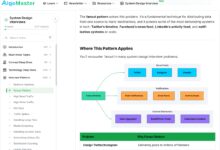

What Is a System Design Interview?

A system design interview evaluates your ability to design scalable, reliable, and efficient systems under real-world constraints. Unlike coding interviews that focus on algorithms, this round tests your architectural thinking, trade-off analysis, and communication skills.
Purpose and Goals of System Design Interviews
Companies like Google, Amazon, and Meta use system design interviews to assess how well candidates can translate business requirements into technical architecture. The goal isn’t perfection—it’s structured thinking.
- Evaluate problem-solving in ambiguous scenarios
- Test knowledge of distributed systems and scalability
- Assess communication and collaboration skills
“It’s not about knowing everything, but showing how you think.” — Gayle Laakmann McDowell, author of Cracking the Coding Interview
How It Differs From Coding Interviews
While coding interviews demand precise syntax and optimal time complexity, system design interviews are open-ended. There’s no single correct answer. Instead, interviewers look for clarity, scalability, and awareness of trade-offs.
- Coding: Focused on implementation details
- System Design: Focused on high-level architecture
- Grading is based on process, not just output
Core Components of a Successful System Design Interview
Mastering a system design interview requires more than technical knowledge—it demands a structured approach. Here’s what separates good answers from great ones.
Requirement Clarification
Never jump into design without asking questions. Clarify functional and non-functional requirements early. For example, if asked to design Twitter, ask:
- How many active users? (e.g., 300M MAUs)
- What features matter most? (tweets, likes, timelines)
- What’s the read-to-write ratio? (e.g., 100:1)
These numbers shape your entire architecture. Resources like System Design Primer on GitHub offer excellent templates for requirement gathering.
Back-of-the-Envelope Estimation
Estimate key metrics: storage, bandwidth, QPS (queries per second). This shows you understand scale.
- Calculate daily active users (DAU): 10% of 300M = 30M
- Estimate tweets per day: 500M
- Storage per tweet: ~1KB → 500GB/day
- QPS for writes: 500M / 86400 ≈ 5.8K QPS
These rough calculations guide your choice of databases, caching layers, and CDNs.
System Interface Definition
Define APIs clearly. For a URL shortening service like TinyURL, specify:
POST /shorten {"url": "..."}→ returns{"short_url": "abc123"}GET /abc123→ 301 redirect to original
This sets the stage for data modeling and component design.
Step-by-Step Framework for Tackling Any System Design Interview
Having a repeatable framework is crucial. Follow this 6-step method to stay organized and impress interviewers.
Step 1: Clarify Requirements
Ask probing questions. Is the system read-heavy or write-heavy? Are we optimizing for latency or consistency? Who are the users? What’s the expected growth?
- Functional: What should the system do?
- Non-functional: Performance, availability, durability
- Constraints: Budget, team size, tech stack preferences
Step 2: High-Level Design (Sketch the Architecture)
Draw boxes and arrows. Start simple: client → load balancer → app server → database. Then expand.
- Use standard components: Load balancers, web servers, databases
- Show data flow clearly
- Label key services (e.g., Auth Service, Feed Service)
For inspiration, check out ByteByteGo, a popular resource for visual system design breakdowns.
Step 3: Deep Dive Into Core Components
Pick 1–2 critical parts and go deeper. For a social media feed:
- How is the news feed generated? (Push vs. Pull models)
- Where is data stored? (Redis for recent posts, Cassandra for history)
- How do you handle fan-out at scale?
This demonstrates depth without getting lost in minutiae.
Step 4: Data Storage and Database Design
Choose the right database. Consider:
system design interview – System design interview menjadi aspek penting yang dibahas di sini.
- Relational (MySQL) vs. NoSQL (DynamoDB, MongoDB)
- Consistency needs: Strong vs. eventual
- Partitioning strategy: Hash-based, range-based
For example, user profiles might use MySQL, while activity streams use Cassandra for high write throughput.
Step 5: Address Scalability and Reliability
Explain how your system scales horizontally. Discuss:
- Sharding: How you split data across nodes
- Replication: Master-slave vs. multi-master
- Failover mechanisms: How the system recovers from crashes
Also mention monitoring, logging, and alerting—key for reliability.
Step 6: Discuss Trade-Offs and Alternatives
No design is perfect. Acknowledge limitations and alternatives.
- “We chose eventual consistency for faster writes, but users might see stale data temporarily.”
- “A microservices architecture increases flexibility but adds operational complexity.”
This shows maturity and real-world awareness.
Common System Design Interview Questions and How to Approach Them
Certain problems appear repeatedly. Knowing how to structure your response gives you a competitive edge.
Design a URL Shortening Service (e.g., TinyURL)
Key considerations:
- Generate unique short codes (Base62 encoding)
- Handle redirects with low latency (use DNS + CDN)
- Scale to billions of URLs (shard the database)
Consider caching popular URLs in Redis to reduce DB load.
Design a Social Media News Feed (e.g., Facebook or X)
Two main models:
- Push (write-heavy): Pre-compute feeds when someone posts
- Pull (read-heavy): Assemble feed on request
- Hybrid: Use push for active friends, pull for others
Trade-off: Push has higher write cost but faster reads; pull is the reverse.
Design a Chat Application (e.g., WhatsApp or Slack)
Challenges include:
- Real-time messaging (WebSockets or MQTT)
- Message ordering and delivery guarantees
- Support for groups, offline messages, and syncing
Use a message queue like Kafka for durability and fan-out.
Essential Tools and Technologies to Know for System Design Interviews
You don’t need to be an expert in every tool, but familiarity with key technologies strengthens your credibility.
Databases: SQL vs. NoSQL
Understand when to use each:
- SQL (PostgreSQL, MySQL): ACID compliance, complex queries
- NoSQL (MongoDB, Cassandra): Horizontal scaling, flexible schema
- Time-series (InfluxDB): For metrics and logs
For more, see MongoDB’s guide to NoSQL.
Caching Strategies and Tools
Caching is critical for performance.
- Redis: In-memory data store, supports TTL, pub/sub
- Memcached: Simpler, multi-threaded, good for simple key-value
- CDN: Cache static assets globally (e.g., Cloudflare, Akamai)
Know cache invalidation strategies: write-through, write-around, write-back.
Message Queues and Event-Driven Architecture
Decouple services using queues.
system design interview – System design interview menjadi aspek penting yang dibahas di sini.
- Kafka: High-throughput, durable, supports replay
- RabbitMQ: Flexible routing, easier to manage
- Amazon SQS: Fully managed, integrates with AWS
Use cases: async processing, fan-out, buffering during spikes.
How to Prepare for a System Design Interview: A 30-Day Plan
Preparation is the key to confidence. Here’s a realistic 30-day roadmap.
Week 1: Build Foundational Knowledge
Focus on core concepts:
- Scalability: Vertical vs. horizontal
- Availability: SLAs, redundancy
- Consistency models: Strong, weak, eventual
- Latency vs. throughput trade-offs
Resources: Read Designing Data-Intensive Applications by Martin Kleppmann (often called the “bible” of system design).
Week 2: Study Common Design Patterns
Learn architectural patterns:
- Load balancing (round-robin, least connections)
- Database replication and sharding
- Service-oriented vs. microservices
- Caching layers (client-side, server-side, CDN)
Practice drawing architectures on paper or using tools like Excalidraw.
Week 3: Practice Real Interview Questions
Work through 1–2 problems daily. Examples:
- Design YouTube
- Design a parking lot system
- Design a ride-sharing app (like Uber)
Use platforms like LeetCode System Design for structured practice.
Week 4: Mock Interviews and Feedback
Simulate real conditions:
- Time yourself (45 mins per question)
- Explain your thinking out loud
- Get feedback from peers or mentors
Record yourself to improve communication clarity.
Advanced Tips to Stand Out in a System Design Interview
Everyone studies the basics. To truly shine, go beyond the template.
Think in Terms of Cost and Business Impact
Top candidates consider cost-efficiency.
- “We could use S3 for storage, but Glacier is cheaper for archives.”
- “Running 100 EC2 instances costs $X/month—can we optimize with auto-scaling?”
This shows you’re not just a coder, but a strategic thinker.
Anticipate Follow-Up Questions
Interviewers often drill down. Be ready for:
- “How do you handle data loss in the cache?”
- “What if the database goes down?”
- “How do you secure the API?”
Prepare backup plans and fallback mechanisms.
Communicate Like a Senior Engineer
Use clear, confident language.
- “One approach is X, which gives us Y benefit but has Z drawback.”
- “I’d recommend A over B because of C.”
- “Let me sketch this out so it’s clearer.”
Good communication often matters more than perfect design.
Real-World Case Studies: How Top Companies Handle System Design
Learning from real systems provides invaluable insights.
system design interview – System design interview menjadi aspek penting yang dibahas di sini.
How Netflix Scales Its Streaming Platform
Netflix serves over 200 million users. Key strategies:
- Microservices: Over 1,000 services, independently deployable
- Chaos Engineering: Tools like Chaos Monkey test resilience
- CDN: Uses Open Connect to cache content close to users
Source: Netflix Tech Blog
How Twitter Handles Billions of Tweets
Twitter’s architecture evolved from monolith to distributed systems.
- Manhattan: Custom distributed database for low-latency access
- FlockDB: Graph database for follower relationships (now deprecated)
- Hybrid feed: Mix of push and pull models for timelines
Source: Twitter Engineering Blog
How Google Designs for Global Availability
Google’s infrastructure is built for 24/7 uptime.
- Spanner: Globally distributed, strongly consistent database
- Borg: Cluster management system (precursor to Kubernetes)
- Global load balancing: Directs traffic to nearest data center
Source: Google Research
What is the most common mistake in a system design interview?
Failing to clarify requirements. Jumping into design without understanding scale, features, or constraints leads to irrelevant solutions. Always start by asking questions.
How long should I spend preparing for a system design interview?
Most engineers need 4–8 weeks of focused study. If you’re new to distributed systems, allocate more time. Consistency beats cramming.
Do I need to know specific tools like Kubernetes or Docker?
Not deeply, but awareness helps. Mentioning containerization or orchestration shows you understand modern deployment practices. Focus on concepts over syntax.
Can I use diagrams during the interview?
Absolutely. Drawing a clear architecture diagram is expected. Use boxes, arrows, and labels to show components and data flow. Digital whiteboards (like Miro) or paper are both fine.
How important is scalability in a system design interview?
Extremely. Scalability is a core theme. Interviewers want to see you think beyond a single server—how the system grows with users, data, and traffic.
Mastering the system design interview isn’t about memorizing answers—it’s about developing a mindset. By clarifying requirements, estimating scale, designing modularly, and communicating clearly, you position yourself as a strategic thinker. Combine technical depth with real-world awareness, and you’ll not only pass the interview but thrive in the role. Preparation, practice, and perspective are your ultimate tools.
system design interview – System design interview menjadi aspek penting yang dibahas di sini.
Recommended for you 👇
Further Reading: